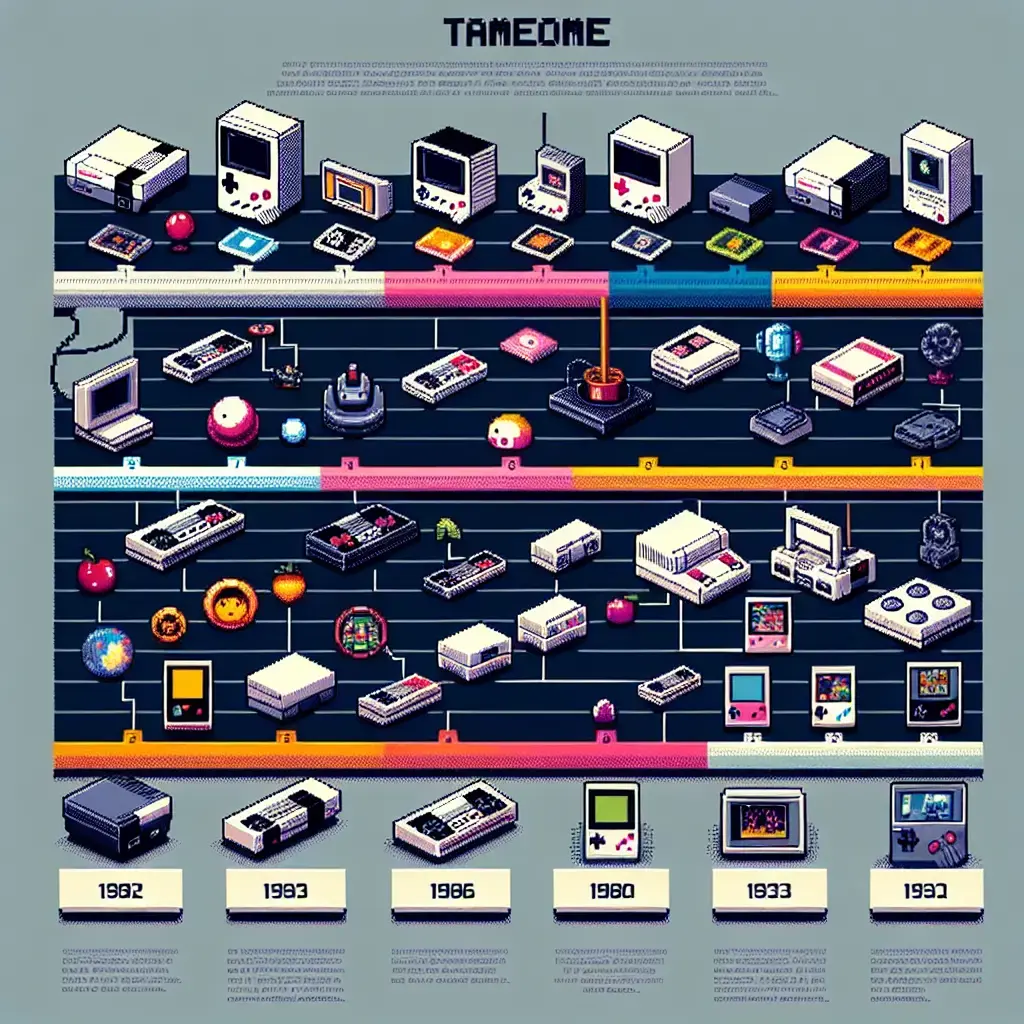
The 8-bit era of video games represents a pivotal chapter in retro gaming history, captivating enthusiasts with its iconic pixel art and vintage gaming charm. As we journey back to the era of classic video games, the evolution of 8-bit graphics in retro gaming consoles stands as a testament to the ingenuity and creativity of old-school gaming pioneers. These consoles, which emerged prominently during the 1980s, laid the foundation for a cultural phenomenon, influencing not just the gaming industry but also art, music, and popular culture.
A Legacy of Simplicity: The Allure of Pixel Art
The beauty of pixel art lies in its simplicity, a hallmark of the 8-bit era. This distinctive style has captivated audiences for decades, bringing virtual worlds to life with characters and landscapes that, despite their limited visual detail, spark the imagination. The creativity of developers during this time laid the foundation for what would become a cultural phenomenon. An example of this enduring appeal is "Legacy of Kain: Soul Reaver," available on platforms like the Super Pocket retro handheld, showcasing how retro gaming consoles preserve gaming history (Retro Dodo).
Bridging Past and Present: Backwards-Compatible Consoles
The blending of old-school gaming with modern technology is a growing trend. Recently, Atari announced the release of the Atari 7800 Plus console, a modernized version of its classic model. This console retains compatibility with original cartridges from the Atari 2600 and 7800, offering players a seamless experience that bridges past and present gaming worlds (TrendHunter). These backward-compatible consoles showcase the evolution of 8-bit graphics by providing gamers with an authentic experience while embracing modern enhancements like HDMI connectivity for improved visual quality.
Retro Graphics Evolution: Case Studies and Innovations
The evolution of retro graphics during the 1980s was marked by numerous innovations. Developers pushed the boundaries of what was possible with limited hardware capabilities, creating memorable gaming experiences that are still celebrated today. A noteworthy development is the popularity of flash carts among retro gaming enthusiasts. These accessories allow players to experience classic video games in their original form while utilizing modern technology to enhance gameplay (Nintendo Life). This intersection of old and new highlights the ongoing evolution of retro graphics.
Gaming Nostalgia: The Cultural Impact
The cultural impact of 8-bit graphics extends beyond gaming itself, influencing various aspects of popular culture such as art, music, and fashion. The nostalgia associated with retro gaming consoles resonates with fans and collectors alike. Antstream's new cloud streaming service for PlayStation, featuring over 1,300 classic games from platforms like Atari, further emphasizes the lasting appeal and influence of 1980s video games on contemporary gaming culture (TweakTown).
Future Prospects: Embracing Retro in Modern Contexts
Looking to the future, it’s clear that the legacy of the 8-bit era will continue to shape modern gaming trends. Enthusiasts are finding new ways to incorporate vintage gaming into current contexts, as evidenced by creative projects like transforming a Steam Deck into a Bondi Blue iMac-inspired handheld (The Verge). Additionally, high-quality remasters and adaptations like the upcoming Half-Life 2 RTX mod demonstrate how developers are inspired by retro aesthetics while leveraging cutting-edge technology to enhance player experiences (PC Gamer).
Conclusion: Celebrating the Legacy of 8-Bit Graphics
The evolution of 8-bit graphics in retro gaming consoles is a story of creativity triumphing over constraints. From the captivating simplicity of pixel art to modern innovations in backward compatibility, this era has left an indelible mark on the gaming landscape. As enthusiasts continue to embrace both nostalgia and innovation, the legacy of classic video games will undoubtedly persist in shaping future gaming experiences.
Whether through backward-compatible consoles like the Atari 7800 Plus or innovative projects blending past and present aesthetics, the spirit of old-school gaming lives on. We invite you, our readers, to share your experiences with retro gaming and how it has influenced your perspective on modern games. Your insights could be a vital part of this ongoing narrative. Let's continue to celebrate and explore the captivating world of vintage gaming together.
Derek Lawson